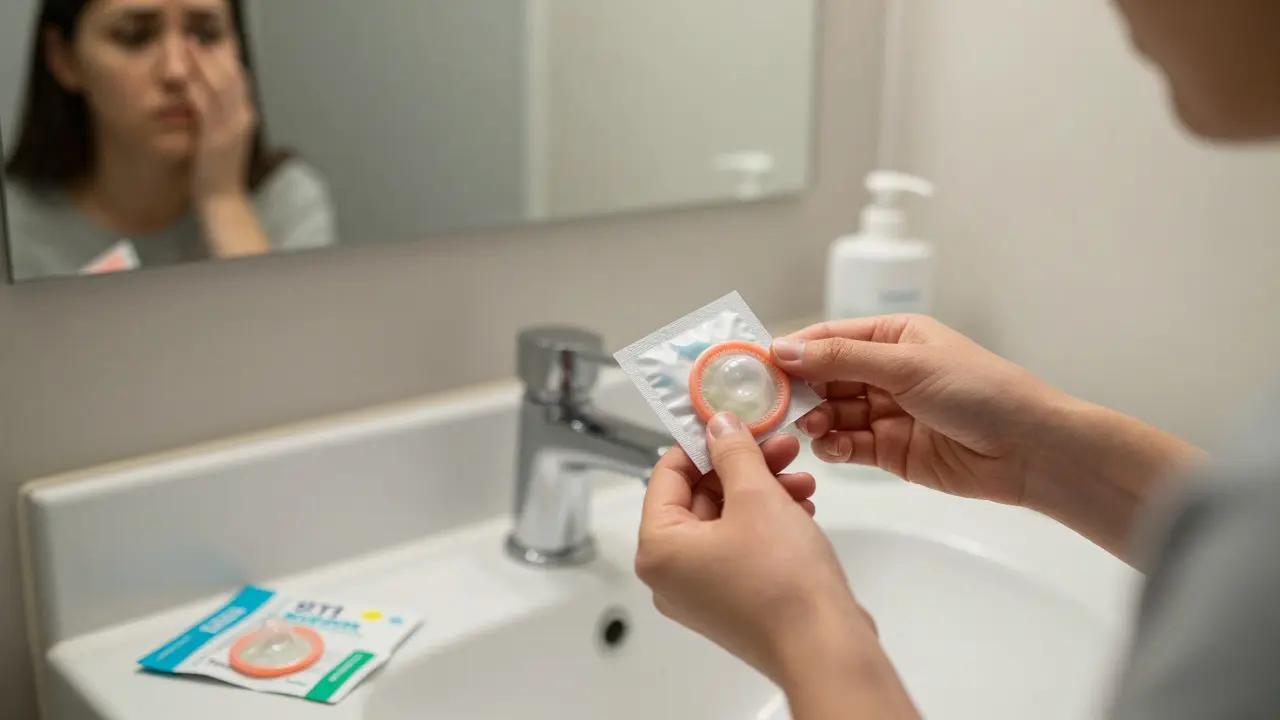
People often assume oral sex is safe because it doesn’t lead to pregnancy. But skipping a condom or dental dam during oral sex isn’t risk-free. It’s not just about HIV-it’s about a handful of infections that can spread easily through skin-to-skin contact or bodily fluids, even when there are no visible sores or symptoms.
What Can You Actually Catch From Oral Sex?
Chlamydia, gonorrhea, and syphilis can all be passed through oral sex. The throat is a common site for gonorrhea infection, and many people don’t know they have it because symptoms are often mild or absent. A 2023 study from the UK Health Security Agency found that throat gonorrhea cases rose by 42% in the last five years, with most linked to unprotected oral sex.
Herpes simplex virus (HSV-1 and HSV-2) spreads easily during oral sex. If your partner has a cold sore, even a tiny one you can barely see, you can get herpes on your genitals-or vice versa. HSV-1, once mostly linked to mouth sores, is now the leading cause of new genital herpes cases in people under 30.
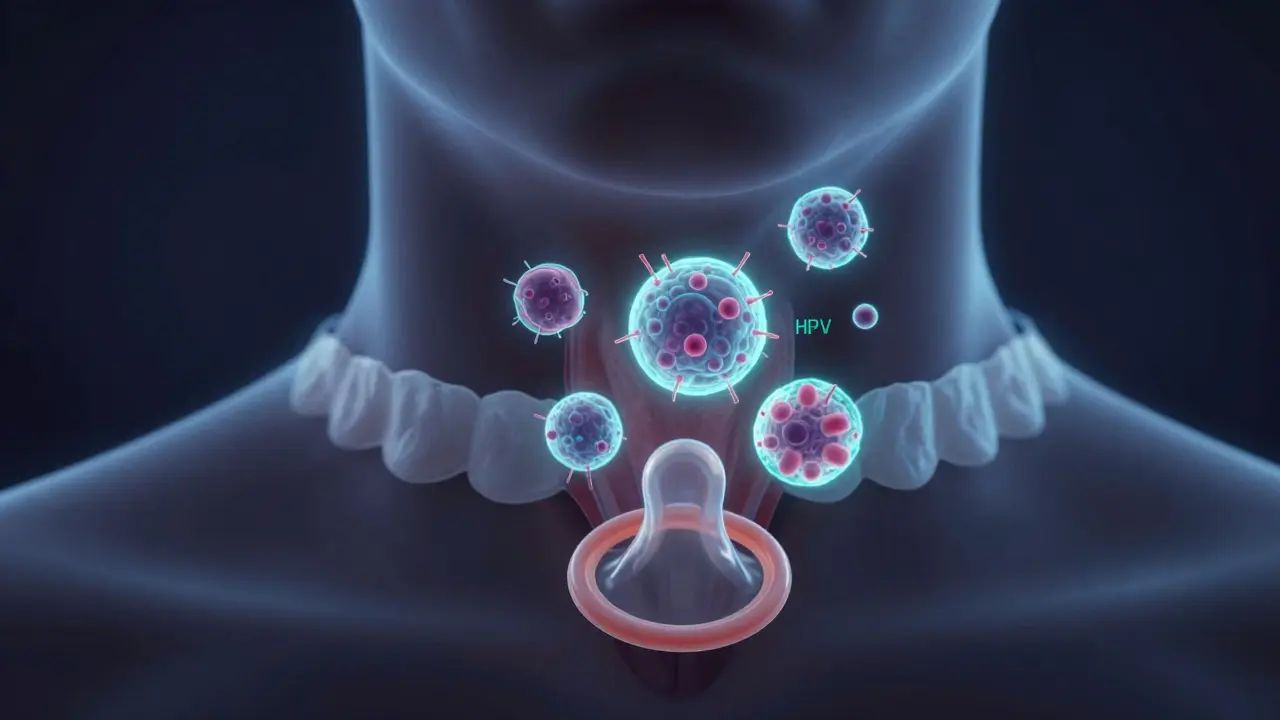
HPV is another silent risk. Certain strains of HPV, especially type 16, are tied to throat and mouth cancers. The CDC estimates that about 70% of oropharyngeal cancers in the U.S. are caused by HPV, and most of those infections come from oral sex over time. Vaccination helps, but it doesn’t cover all strains, and it only works if given before exposure.
Why People Skip Protection (And Why That’s Dangerous)
Many people avoid condoms during oral sex because they say it kills the mood. Others think, "I’ve never had symptoms," or "My partner looks clean." But infections don’t always show up. Someone can carry gonorrhea in their throat for months without knowing. A person with genital herpes can shed the virus and infect you even when they have no outbreak.
Another myth: "I’ve done this a hundred times and never got sick." That’s not proof it’s safe-it’s just luck. STIs don’t strike every time. They strike when conditions line up: a high viral load, a small cut in the mouth, a weakened immune system. One time is all it takes.
How to Reduce the Risk Without Losing Pleasure
You don’t have to give up oral sex to stay safe. There are simple, effective ways to lower risk without ruining the moment.
- Dental dams are thin latex or polyurethane sheets made for oral-vaginal or oral-anal contact. They’re cheap, easy to find online, and come in flavors. If you don’t have one, you can cut open a condom lengthwise to make a flat barrier.
- Condoms for oral-penile contact are just as effective. Flavored condoms are widely available and designed to taste better. Many people say they barely notice the difference after the first few uses.
- Get tested regularly. If you’re sexually active with new or multiple partners, get tested for throat gonorrhea and chlamydia every 3-6 months. Most clinics offer swab tests that are quick and painless.
- Watch for signs. Redness, sore throat, swollen glands, or white patches in the mouth can signal infection. Don’t ignore them.
What About Vaccines and Prevention?
The HPV vaccine protects against the strains that cause most throat and genital cancers. It’s recommended for everyone up to age 26, and some people over 26 can still get it if they haven’t been exposed. Talk to your doctor-many don’t bring it up unless you ask.
The hepatitis B vaccine also matters. It’s spread through bodily fluids, including saliva in rare cases. If you’ve never been vaccinated, it’s a simple three-shot series that gives lifelong protection.
PrEP (pre-exposure prophylaxis) is for HIV prevention and doesn’t protect against other STIs. But if you’re at higher risk for HIV through multiple partners or other sexual behaviors, PrEP is worth considering. It’s not a substitute for barriers during oral sex, but it adds another layer of safety.
Real Talk: What Do Experts Actually Say?
The British Association for Sexual Health and HIV (BASHH) says: "Unprotected oral sex carries low risk for HIV, but moderate risk for other STIs. Barriers should be used consistently if either partner has unknown STI status or multiple partners."
Dr. Sarah Thompson, a consultant in sexual health at Liverpool’s Royal Liverpool University Hospital, puts it plainly: "We see people come in with throat gonorrhea and assume it came from kissing. It didn’t. It came from oral sex without protection. We’ve had patients in their 20s with early-stage throat cancer because of HPV they got from oral sex years earlier. It’s not rare. It’s preventable."

When to Get Tested and What to Ask For
If you’ve had unprotected oral sex and are worried, don’t wait for symptoms. Go to a sexual health clinic or your GP. Ask for:
- Throat swab for gonorrhea and chlamydia
- Swab or blood test for syphilis
- HPV testing if you’re over 30 or have a history of abnormal Pap smears
- Herpes blood test if you’ve had sores or are concerned about exposure
Most tests are free on the NHS. Results come back in 1-2 weeks. If you’re diagnosed, treatment is usually simple-antibiotics for bacterial infections, antivirals for herpes. Early detection stops spread and prevents long-term damage.
Bottom Line: Is It Worth the Risk?
Oral sex without a condom isn’t a harmless act. It’s a low-risk behavior for HIV, but not for everything else. The infections you can catch are common, often symptomless, and some can lead to serious health problems years later.
Using a barrier isn’t about distrust. It’s about responsibility. It’s about knowing that your body deserves protection, no matter how "safe" something feels. A condom or dental dam takes five seconds. A throat cancer diagnosis lasts a lifetime.
Protect yourself. Protect your partners. It’s not about fear-it’s about smart choices.
Can you get HIV from oral sex without a condom?
The risk of getting HIV from oral sex is extremely low, especially if there’s no blood involved. You’re far more likely to catch gonorrhea, chlamydia, herpes, or HPV. But if your partner has a high viral load and you have cuts or sores in your mouth, transmission is possible-though rare. Using a condom or dental dam removes this small risk entirely.
Do flavored condoms work the same as regular ones for oral sex?
Yes. Flavored condoms are made with the same materials and meet the same safety standards as regular condoms. The flavoring is food-grade and doesn’t affect protection. They’re designed specifically for oral sex and often feel more comfortable than unflavored ones.
Can you get an STI from kissing?
You can get herpes (cold sores) from kissing if your partner has an active outbreak. Other STIs like gonorrhea and chlamydia are not spread through kissing alone-they need direct contact with infected genital fluids or mucous membranes. Oral sex is the main route for throat infections.
How often should I get tested for STIs if I have oral sex?
If you have oral sex with new or multiple partners, get tested every 3-6 months. Include throat swabs for gonorrhea and chlamydia. If you have symptoms like a persistent sore throat, swollen glands, or unusual sores, get tested immediately-don’t wait.
Is oral sex safer than vaginal or anal sex?
Oral sex carries less risk of HIV and pregnancy than vaginal or anal sex. But for other STIs like gonorrhea, syphilis, and HPV, the risk is similar if no barrier is used. The idea that oral sex is "safe sex" is misleading. Only barrier use makes it safer.
Next steps: If you’ve had unprotected oral sex recently, schedule a test. If you’re not already using barriers, buy a pack of dental dams or flavored condoms this week. Your future self will thank you.