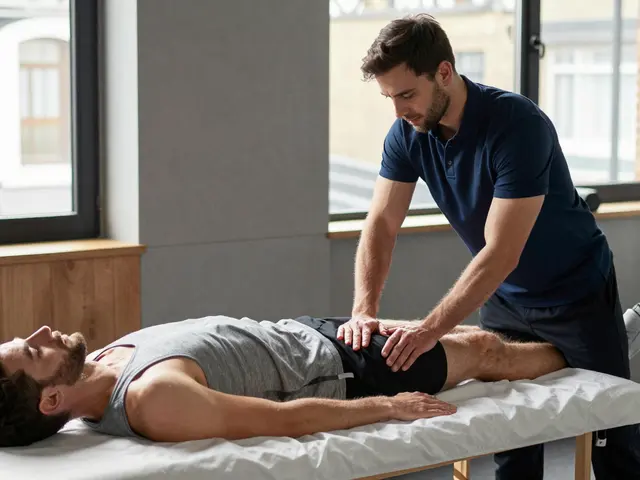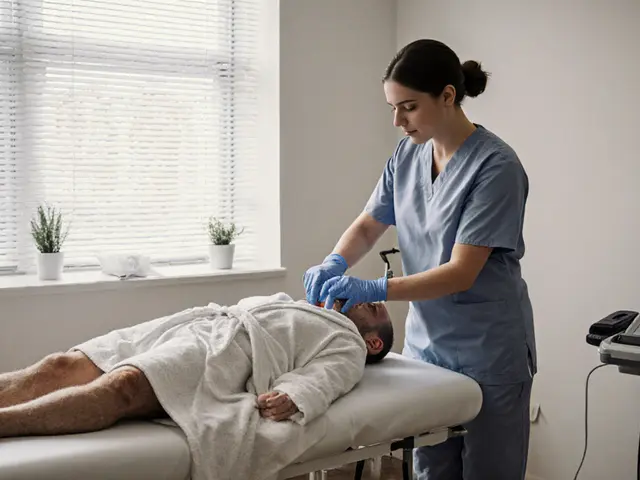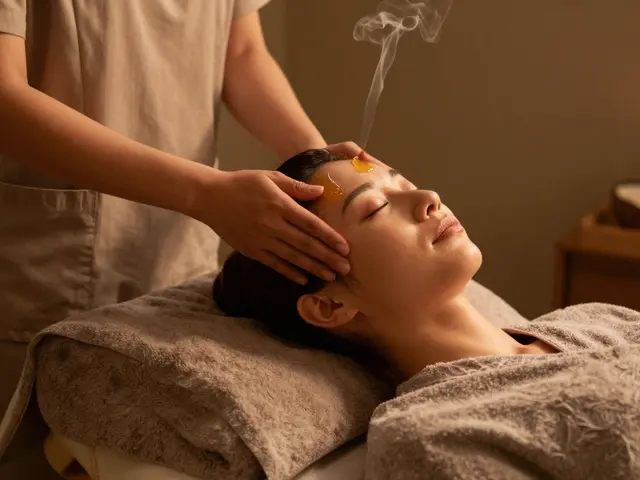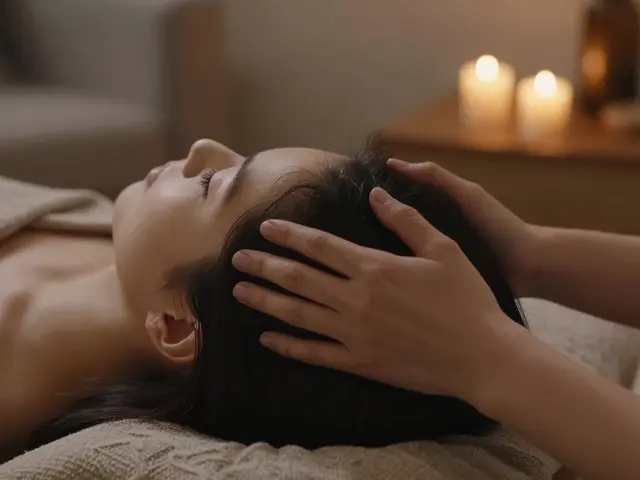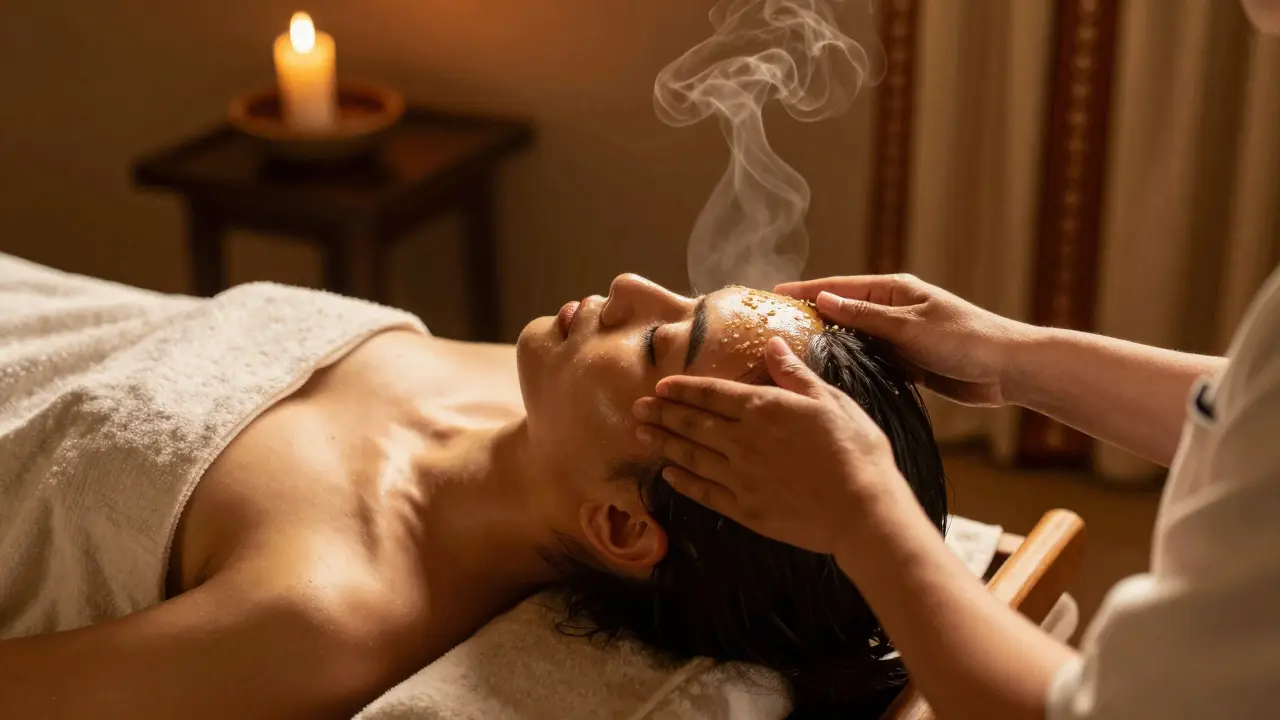
Ever sat in a quiet room with warm oil on your scalp and felt your shoulders drop before you even knew you were holding them? That’s the power of an Indian head massage. It’s not just about rubbing your head-it’s a full sensory reset that’s been practiced for thousands of years in India, especially in Ayurvedic traditions. If you’ve ever wondered what actually happens during one, here’s the real breakdown-no fluff, no marketing buzzwords, just what you’ll feel, why it works, and what you should expect.
It starts with warm oil
Most Indian head massages begin with warm oil. Not just any oil-typically sesame, coconut, or almond oil, gently heated to body temperature. Sometimes herbal infusions like rosemary, brahmi, or fenugreek are added for their calming or strengthening properties. The oil isn’t just for lubrication. It’s absorbed through the scalp, nourishing hair follicles and the skin beneath. The warmth helps open pores and relaxes the muscles in your neck and shoulders before the pressure even begins.Focus on pressure points
Unlike a typical spa massage that glides over the surface, Indian head massage targets specific energy points. These are called marmas in Ayurveda-vital junctions where nerves, muscles, tendons, and blood vessels meet. There are 107 marmas in the body, and about 15 of them are concentrated in the head, neck, and shoulders. The therapist uses their thumbs, fingertips, and sometimes knuckles to apply firm, rhythmic pressure to these spots. You might feel a slight ache at first-especially around the temples or base of the skull-but it quickly turns into a deep, soothing release. This isn’t random rubbing. It’s precise stimulation designed to unblock energy flow and reduce tension buildup.The massage moves in patterns
The session follows a set sequence. It begins at the forehead, then moves to the temples, behind the ears, down the neck, across the shoulders, and finally over the scalp. Each area gets attention in a circular or back-and-forth motion. The scalp work is especially distinctive-you’ll feel the therapist’s fingers gliding in small circles, tugging gently at the hair roots, and pressing along the hairline. It might sound odd, but this isn’t about styling your hair. It’s about stimulating blood circulation to the scalp, which helps deliver oxygen and nutrients to hair follicles. Many people report thicker hair and less shedding after consistent sessions.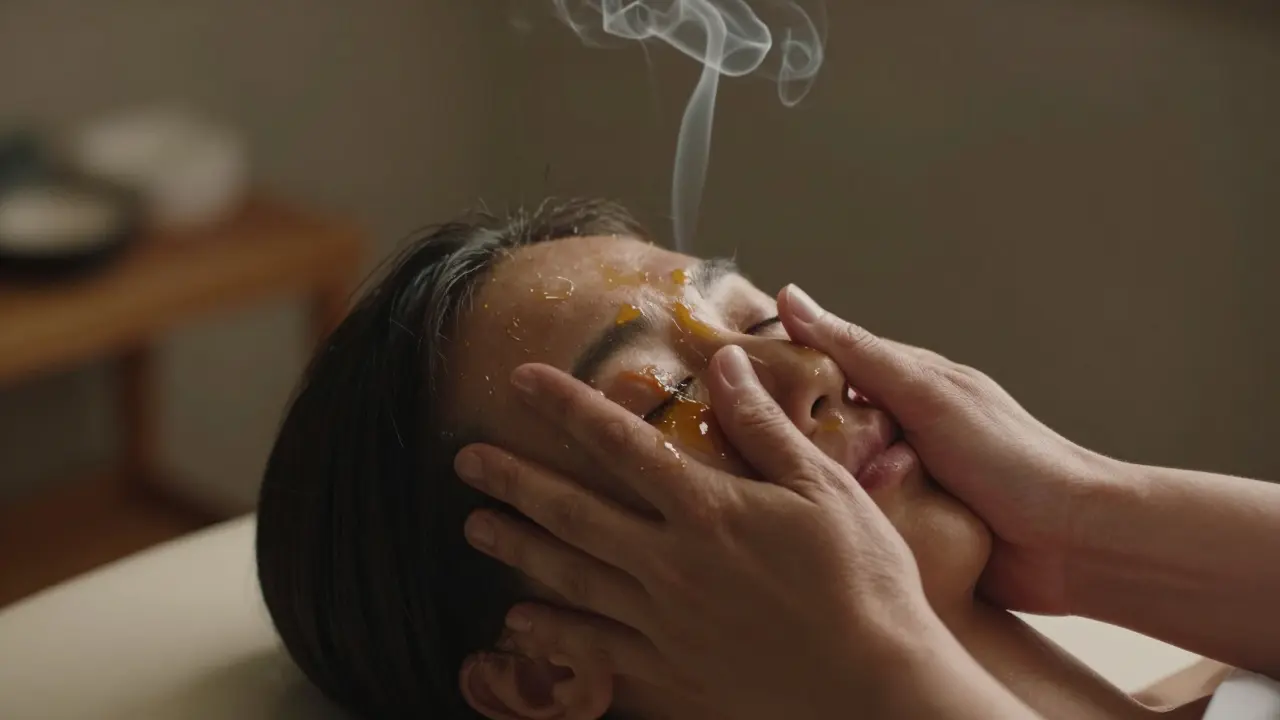
It includes the neck and shoulders
Don’t think this is just a head thing. The neck and shoulders are critical. Most people carry stress in these areas without realizing it. The therapist will use deep, kneading motions along the trapezius muscles-those big muscles that run from your neck to your upper back. They’ll also work around the base of the skull, where tension knots form from staring at screens all day. You might hear a soft crack or pop as tight muscles release. That’s not the bones moving-it’s gas escaping from joint capsules. It’s harmless and often feels like a sigh coming out of your body.It’s not just physical
The real magic of Indian head massage isn’t only in the muscles or the oil. It’s in the rhythm. The slow, steady pressure, the warmth, the quiet room, the scent of herbs-it all signals your nervous system to switch from fight-or-flight to rest-and-digest. Studies from the University of Southampton found that participants who received regular head massages showed a 30% drop in cortisol levels over six weeks. That’s the stress hormone. Lower cortisol means better sleep, fewer headaches, and less anxiety. You don’t need to believe in energy channels to feel the difference. Your body knows when it’s being cared for.What you’ll feel afterward
Right after the massage, you might feel a little lightheaded. That’s normal. The increased blood flow to your head can cause a brief, mild rush. Drink water. Don’t jump into a cold shower or rush back into a noisy office. Give yourself 10-15 minutes to settle. Then, you’ll likely feel calm, clear-headed, and oddly energized. Many people say they sleep better that night. Others notice their jaw isn’t clenched anymore, or their eyes feel less strained. If you suffer from migraines or tension headaches, this isn’t a cure-but it’s one of the most reliable natural tools to reduce frequency and intensity.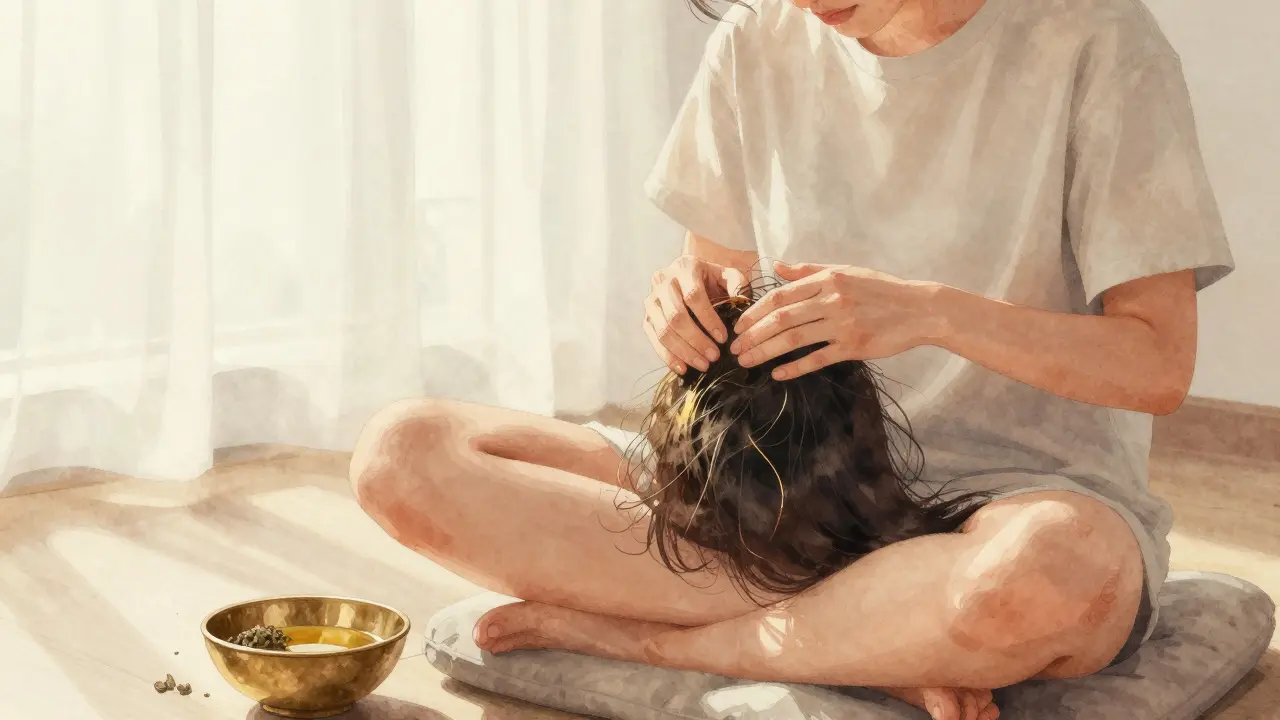
Who shouldn’t try it?
It’s generally safe for most people. But if you have a scalp infection, open wounds, recent head or neck surgery, or severe osteoporosis, you should skip it-or get clearance from your doctor. Pregnant women can usually have it done, but only with lighter pressure and no deep work on the neck. If you’re on blood thinners, let your therapist know. They’ll adjust the pressure to avoid bruising. And if you’re sensitive to smells, ask if they use unscented oil. Some places add essential oils for aromatherapy, but that’s optional.How often should you do it?
Once a month is enough for general relaxation. If you’re dealing with chronic stress, insomnia, or frequent headaches, once a week for 4-6 weeks can make a noticeable difference. After that, you can cut back. You don’t need to spend hundreds on spa treatments. Many people learn basic techniques from their therapist and do a 10-minute version at home with coconut oil and a few minutes of mindful pressure on the temples and scalp. It’s free, it’s effective, and it’s yours to keep.What you won’t feel
You won’t feel like you’ve been battered. Indian head massage isn’t about deep tissue pain. It’s about controlled pressure that feels good, even when it’s firm. You won’t leave smelling like a spice market unless you ask for it. And you won’t need to wash your hair right away-the oil is meant to soak in. In fact, leaving it on for a few hours or overnight can boost the benefits.Does an Indian head massage help with hair growth?
Yes, indirectly. The massage increases blood flow to the scalp, which delivers more oxygen and nutrients to hair follicles. A 2016 study in the journal Skinmed showed that daily scalp massage for 24 weeks led to thicker hair in 69% of participants. It doesn’t regrow lost hair from genetics or hormones, but it can strengthen existing hair and reduce shedding caused by stress.
Can I do an Indian head massage on myself?
Absolutely. You don’t need a professional to get benefits. Use warm coconut or sesame oil. Sit comfortably, close your eyes, and use your fingertips to make small circles on your scalp for 5-10 minutes. Press gently on your temples, behind your ears, and along your hairline. Spend extra time where you feel tightness. Do it before bed-it helps with sleep too.
How long does a typical session last?
Most professional sessions last between 30 and 45 minutes. Some spas offer 20-minute express versions focused just on the head and neck. For full benefits, aim for at least 30 minutes. That gives enough time to work through all the pressure points and let your body fully relax.
Is it better than a regular head massage?
It’s different, not necessarily better. A regular head massage might focus on relaxation and light stroking. Indian head massage is structured, targets specific energy points, includes the neck and shoulders, and uses warm oil with therapeutic intent. If you want deep tension relief and a holistic reset, Indian head massage has more depth. If you just want to feel good for 10 minutes, either works.
Do I need to undress for an Indian head massage?
No. You stay fully clothed. You’ll usually sit in a chair or lie on a massage table with your head supported. The therapist works through your clothing or uses a towel to cover your shoulders. Only your head, neck, and shoulders are exposed. It’s a very private, non-invasive treatment.