Group sex isn’t something you walk into on a whim. It’s not a party trick, a viral video, or a bucket list item you check off after a few drinks. If you’re considering it, you’re likely asking yourself: How do I actually prepare? Not just for the physical act-but for the emotional weight, the power dynamics, the vulnerability, and the real consequences that follow.
Start with why
Before anything else, ask yourself why you want to try group sex. Is it curiosity? Peer pressure? A fantasy you’ve had since you were 16? A way to feel more desirable? Or maybe you’re trying to fix something in your relationship? None of these reasons are wrong-but some are dangerous if unexamined.People who enter group settings with the idea that it’ll "spice things up" often end up feeling used, confused, or ashamed. Those who enter because they want to explore intimacy on a deeper level-with clear boundaries and mutual respect-tend to have more meaningful experiences.
There’s no shame in wanting to try something new. But if your motivation is rooted in insecurity, loneliness, or the need to prove something to others, you’re setting yourself up for pain. Take time alone. Write it down. Talk to a therapist if you can. This isn’t about being "ready to have sex"-it’s about being ready to handle what comes after.
Consent isn’t a checkbox-it’s a conversation
You’ve heard "consent is key." But in group settings, consent isn’t just saying "yes" once. It’s ongoing, layered, and sometimes silent.Before any physical contact:
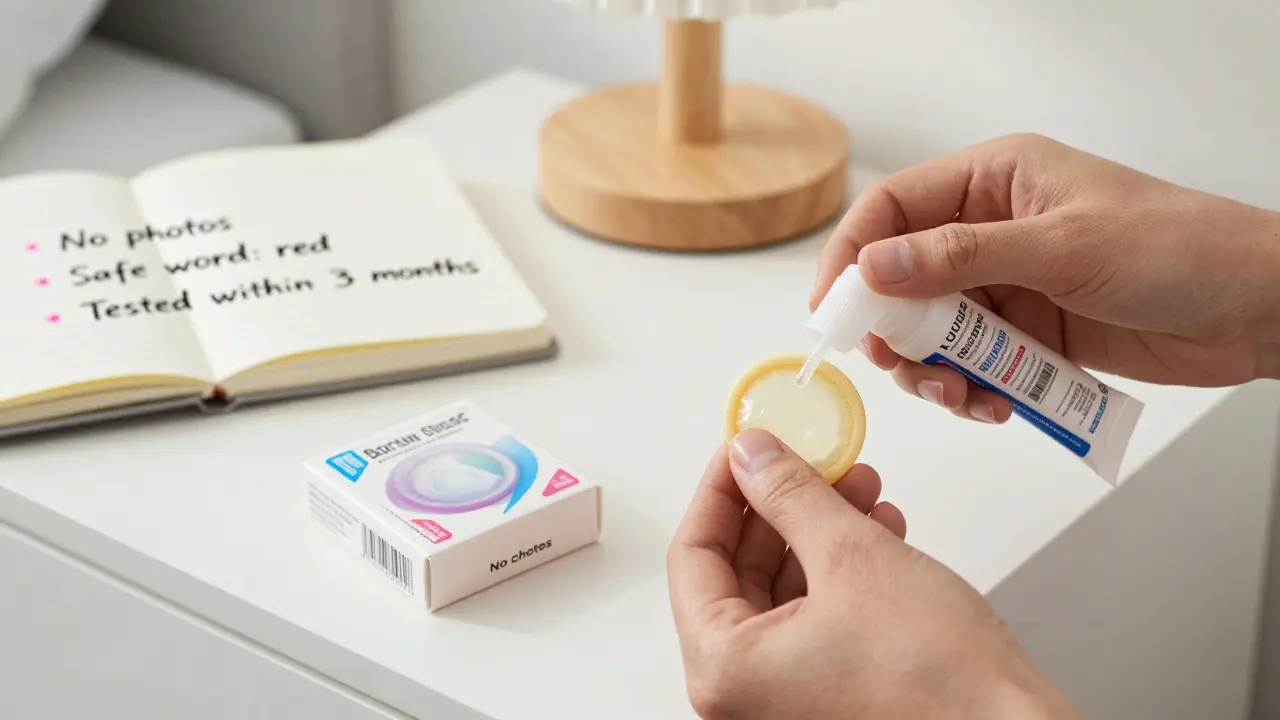
- Have a group discussion with everyone involved-no exceptions. Talk about boundaries, hard limits, safe words, and what each person is comfortable with.
- Agree on how to pause or stop. A hand signal? A word? A tap on the shoulder? Make sure everyone knows and agrees to it.
- Discuss STI status openly. No one should feel pressured to share medical info, but everyone must agree on testing timelines and protection use. If someone hasn’t been tested in the last 3 months, don’t proceed.
- Clarify roles. Who’s watching? Who’s participating? Who’s taking photos? If you’re not 100% sure, assume it’s not happening.
Consent can be withdrawn at any time-even mid-act. If someone says "no" or pauses, stop. No excuses. No "but we were having fun." That’s not sex. That’s violation.
Physical preparation: It’s not just about stamina
Many assume group sex is just about having more people involved. But physically, it’s more complex than solo or two-person sex.Here’s what actually matters:
- Hygiene: Shower before. Wash genitals. Trim nails. Use fresh condoms and dental dams for every new partner or new orifice. Don’t assume someone else is being careful-be the one who sets the standard.
- Comfort: If you’re not comfortable with anal play, don’t do it. If you’re not used to being touched in multiple places at once, don’t rush into it. Start slow. Use lube-plenty of it. Water-based or silicone-based, depending on your materials.
- Physical limits: Your body has limits. If you’re tired, sore, or hungover, don’t go through with it. Group sex demands more energy, more awareness, more control. Pushing through physical discomfort leads to injury or resentment.
- Protection: Use condoms for every penetrative act. Change them between partners. Use gloves for manual stimulation if there’s any risk of cuts or abrasions. This isn’t about fear-it’s about responsibility.
There’s no such thing as "safe enough." There’s only safe. And safe means every single person agrees to the same rules.
Mental preparation: The hardest part
The body can adapt. The mind? Not so easily.Group sex can trigger jealousy, shame, inadequacy, or euphoria-sometimes all at once. You might feel powerful. You might feel exposed. You might feel like you’re losing yourself.
Here’s how to protect your mental space:
- Know your triggers: Do you get jealous when someone else is touched? Do you fear being judged? Do you need to be the center of attention? Understand these before you enter the room.
- Set emotional boundaries: Can you watch your partner with someone else? Can you be touched by someone you’re not attracted to? Can you be the one watching? Decide this in advance. Write it down. Share it.
- Plan a decompression: Afterward, don’t just leave. Talk. Check in. Say "How are you?" Not "That was hot," but "How are you?" This isn’t just etiquette-it’s emotional hygiene.
- Expect awkwardness: There will be silences. Misunderstandings. Someone fumbles. Someone laughs at the wrong time. That’s normal. Don’t panic. Don’t assume it means something’s wrong. It’s just human.
One person I spoke with said: "I thought I’d feel liberated. Instead, I felt like I’d lost control of my own body." That’s not uncommon. Preparation isn’t just about avoiding harm-it’s about preserving your sense of self.
Who should avoid group sex?
Not everyone should try this. And that’s okay.Group sex is not for you if:
- You’re in a relationship and your partner hasn’t fully agreed-no pressure, no "we’ll see how it goes." Full, enthusiastic consent from everyone involved is non-negotiable.
- You’ve never had a serious conversation about boundaries before.
- You’re recovering from trauma, especially sexual trauma.
- You’re under the influence of alcohol or drugs. Not even a little.
- You’re doing it because you think it’ll make you "more attractive," "more confident," or "less boring." That’s not how identity works.
- You don’t know the people you’re with well. Trust isn’t built in a night.
There’s no prize for being the first. No badge for being "open-minded." There’s only the quiet satisfaction of knowing you showed up as yourself-with care, clarity, and courage.

Afterward: What no one tells you
The experience doesn’t end when the lights come on.Many people feel a wave of emptiness, confusion, or even regret hours-or days-later. That’s not failure. That’s data.
Ask yourself:
- Did I feel respected?
- Did I feel like I could say no at any time?
- Did I enjoy myself-or did I just go through the motions?
- Do I still feel like me?
If the answer to any of these is "no," don’t brush it off. Talk to someone. Journal. Seek support. You don’t have to keep doing this to prove you’re brave.
And if you felt good? That’s valid too. But don’t rush to do it again. Let it sit. Reflect. Learn. This isn’t a hobby. It’s an intimate act that changes how you see yourself and others.
Final thought: It’s not about the group-it’s about the connection
Group sex doesn’t make you more liberated. It doesn’t make you more advanced. It doesn’t make you more sexual.What it does is reveal who you are when you’re vulnerable. When you’re surrounded by desire, expectation, and noise.
Prepare not for the act-but for the truth it might uncover. And if that truth is that you’d rather not? That’s not weakness. That’s wisdom.